

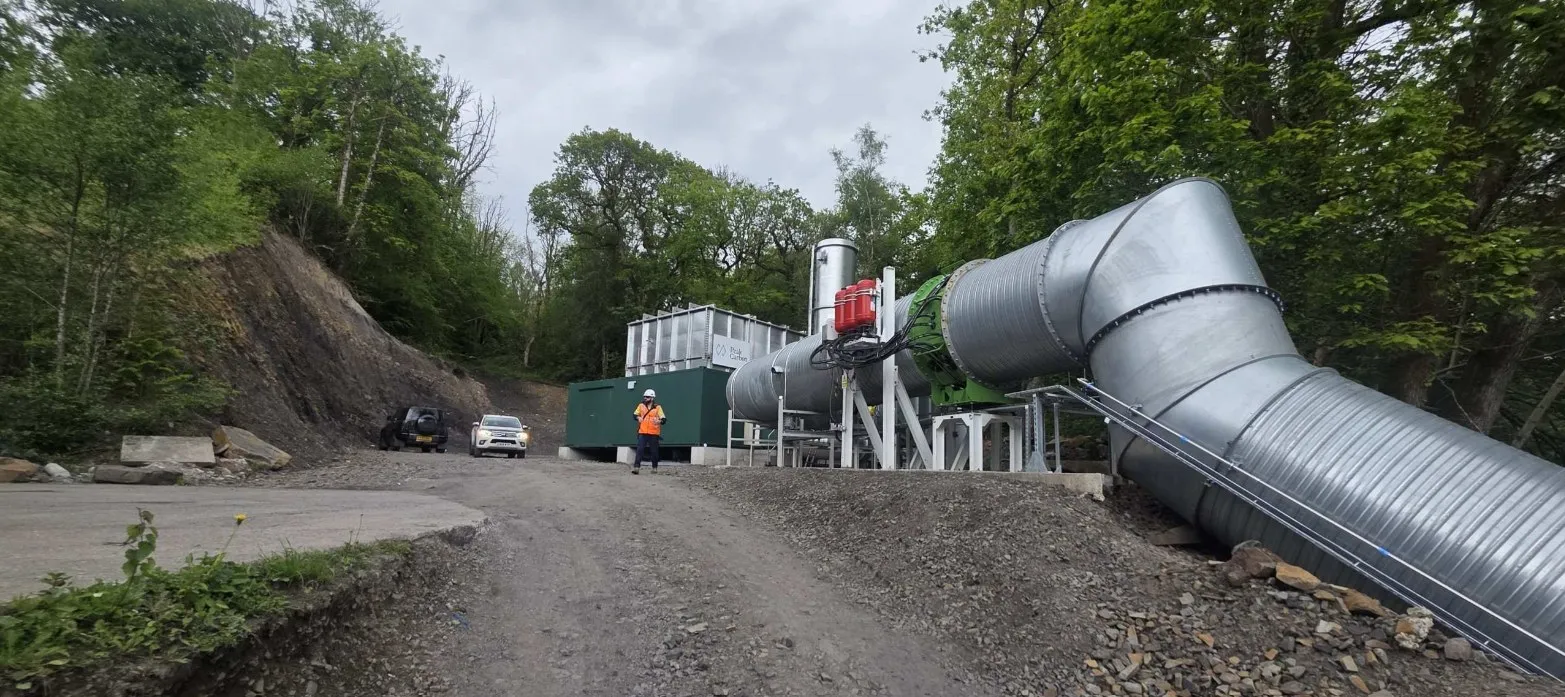
Main supply duct running into the Peak Carbon RTO at Aberpergwm Colliery, South Wales

< back to Methane Abatement

Case study

Aberpergwm Colliery, Wales: safely abating ventilation air methane at 0.2%

  • 0.2%

    methane concentration abated

  • 98%

    destruction efficiency

  • 25 m³/s

    ventilation air treated

  • ~56,000 t

    CO₂-e abated a year

  • AAA

    BeZero carbon rating

For years, two questions have stood in the way of abating ventilation air methane (VAM) at coal mines around the world:

  1. Can the technology destroy methane in airflows as dilute as 0.2%?

  2. And can it be connected to a working mine’s ventilation system without creating material safety risks?

At Aberpergwm Colliery in South Wales, Peak Carbon has answered both. Working with mine owner and operator Energybuild, Peak Carbon designed, built and now operates the world’s first full-scale VAM abatement project to destroy methane at commercial scale, at or below 0.2% concentration. The plant was commissioned in May 2026 and treats 25 m³/s of the mine’s ventilation air.

Safety came first in the design

Connecting any process plant to a mine ventilation shaft introduces potential hazards for the people underground, so Peak Carbon followed a structured functional safety design process from concept onward. Each hazard at the interface between the mine and the plant was identified and assessed, and the safety functions needed to control it were defined and engineered into the system.

The result is a ventilation duct connection with dedicated process safety controls that keep the mine’s ventilation separate from the oxidiser. The plant is designed to the functional safety and coal mining safety standards.

Independently checked, step by step

The design was then checked independently, step by step, before and after the plant began operating. Bureau Veritas has independently audited the project’s safety and performance, as has the United Nations’ International Methane Emissions Observatory (IMEO).

The plant has also become a reference site for the industry. Mine owners and operators, regulators, unions and environmental bodies from Australia, the United States, China and Poland have all visited Aberpergwm to see the technology at work as a potential blueprint for their own operations.
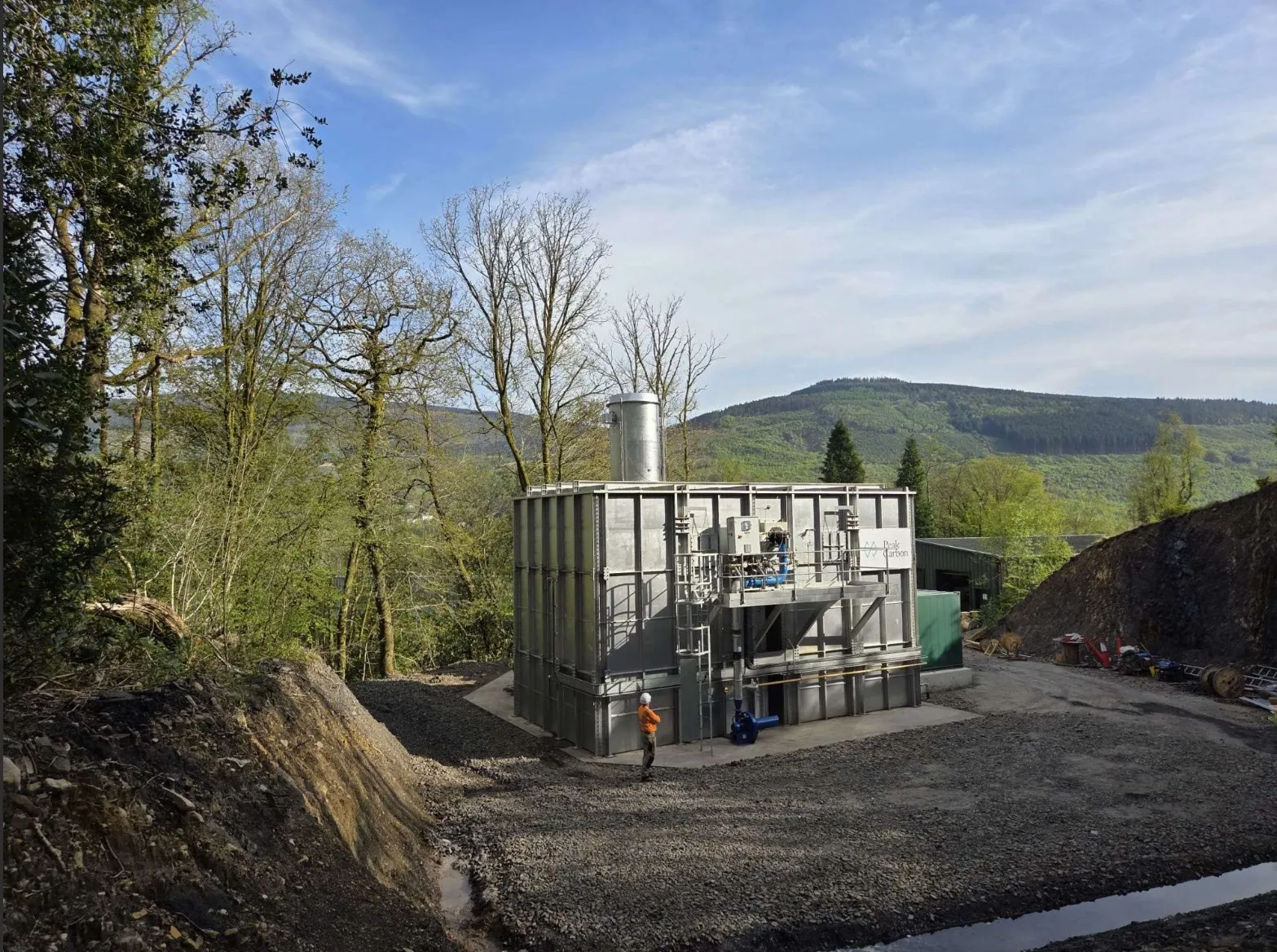
Peak Carbon two-chamber RTO at Aberpergwm Colliery, set in the South Wales hills
Peak Carbon’s two-chamber RTO at Aberpergwm Colliery, South Wales.

The RTO at the heart of the project

At the heart of the project is Peak Carbon’s two-chamber Regenerative Thermal Oxidiser (RTO). The RTO captures and reuses the heat released when methane is oxidised, which lets it sustain its own operation at methane concentrations as low as 0.2%. It achieves 98% destruction efficiency and abates around 56,000 t CO₂-e a year in the demonstration phase.

Precisely calibrated instruments monitor methane emissions and destruction continuously. Carbon ratings agency BeZero has given the project an AAA rating, making it one of only three emissions reduction projects of any type worldwide to hold the highest possible integrity rating.

“Should be the standard set for underground coal mines globally.”

Lead Atmospheric Scientist, UN International Methane Emissions Observatory, on Aberpergwm’s monitoring approach

Ready for wider use

Aberpergwm shows that VAM abatement is ready for wider use. With a voluntary carbon market buyer or a market-based incentive, the site could scale up to abate 340,000 t CO₂-e a year. Coal mines worldwide could replicate the same approach.

Peak Carbon is now bringing this proven, independently verified technology and its safety design approach to other global markets, including Australian mines.

Could your mine be next?

Talk to our engineering team about bringing the Aberpergwm approach to your site.